What Happened and When
On Friday, November 9, 2026, Saudi national Abdulrahman Alfozan appeared in San Francisco federal court and entered a not guilty plea to charges of planting a concealed audio recording device inside OpenAI's office. According to Bloomberg and CNBC, Alfozan was previously arrested and charged last month in connection with the incident. His next court hearing is set for November 17, 2026. The case has drawn attention from media outlets covering both technology and cybercrime developments.
The timing of the arrest and court appearance suggests the investigation moved quickly from discovery to charges and arraignment, indicating the evidence or circumstances were substantial enough for federal prosecutors to move forward. The San Francisco federal court venue reflects the location of OpenAI's headquarters and the jurisdiction where the alleged offense took place.
The Nature of the Charge
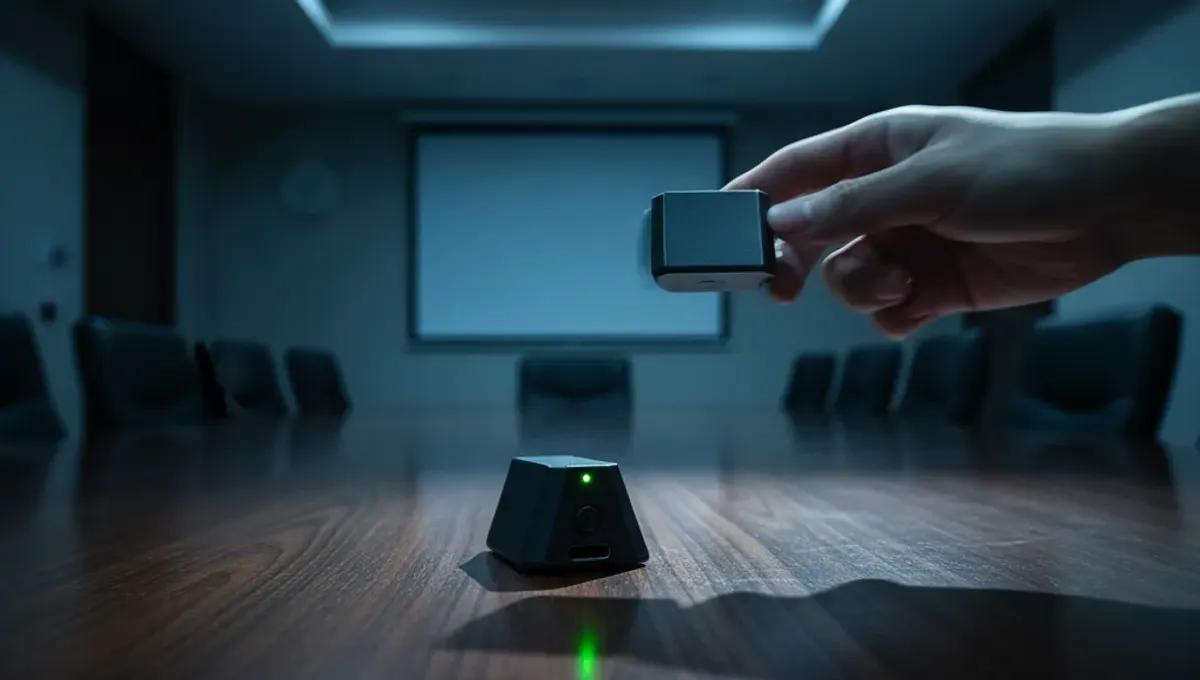
A covert audio recording device planted in an executive meeting room represents an attempt to capture confidential business discussions, strategy decisions, or sensitive information not meant for public or rival consumption. Such devices are typically small, battery-powered, and designed to be concealed in ordinary office objects or architectural features where they are unlikely to be noticed during routine meetings.
For a company like OpenAI, which operates in the highly competitive artificial intelligence sector, access to private board or leadership discussions could expose proprietary research directions, business strategies, investor details, or partnership negotiations. The location in an executive meeting room, rather than a common area, indicates the alleged target was high-level information rather than general office activity.
Why Insider Threats Are Difficult to Prevent
An engineer with legitimate access to OpenAI's facilities had authorization to be in the building and move through hallways and office spaces without raising immediate suspicion. This legitimacy is precisely what makes insider threats so dangerous: background checks and security clearances do not reliably predict future intent or reveal when an employee's motives change due to financial pressure, personal grievance, recruitment by a foreign actor, or ideological motivation.
The Tor Project documentation on digital security emphasizes that technical controls cannot fully substitute for trustworthiness, a principle that extends to physical security. Security vendors tracking corporate breach incidents have consistently reported that a significant portion of unauthorized access or sabotage originates from current or former employees. The insider often faces fewer detection obstacles because security systems assume employees are vetted and trustworthy.
Legal and Prosecution Context
Planting a concealed recording device in a private corporate office without consent violates federal wiretapping and electronic surveillance laws, specifically 18 U.S.C. Section 2511, which prohibits the intentional interception of electronic communications. State-level violations may also apply depending on California's specific statutes governing recording and privacy expectations in workplace settings.
The not guilty plea does not indicate innocence; it is a standard procedural entry that requires the prosecution to prove guilt beyond a reasonable doubt at trial. The defendant's nationality and potential ties to foreign entities or interests may add complexity to the case, as federal prosecutors may explore whether the device was planted at the direction of a third party or foreign government seeking intelligence on U.S. AI development.
What This Means for Tech Companies and Employees
The case reinforces that corporate espionage is not only a theoretical concern but an active law-enforcement priority, especially when it involves companies at the frontier of sensitive technology. Companies like OpenAI likely have already reviewed their physical security protocols, including more frequent sweep detection, badge access logs, and restricted access zones for certain meetings.
Employees and contractors at high-profile tech firms should expect increased scrutiny during hiring, periodic security briefings, and potential restrictions on personal devices or recording equipment in office buildings. The case also serves as a warning to would-be actors that federal prosecution for corporate espionage can result in charges carrying substantial prison sentences.
Lessons for Data Security Awareness
Physical security breaches often precede or complement digital attacks. An adversary with audio recordings of strategic discussions gains context and intelligence that can inform social engineering attacks, malware deployment timing, or targeted recruitment of other insiders. This is why security professionals at sensitive companies treat physical security, employee background checks, and access controls as intertwined with cybersecurity rather than separate concerns.
The incident also highlights that covert recording devices remain affordable and easy to obtain online, making detection and prevention dependent more on vigilance and regular security sweeps than on the inaccessibility of the tools themselves. Companies handling highly sensitive information often use Faraday cages, RF detection sweeps, and secure meeting room protocols to mitigate this risk.
What Happens Next
The case is still in the early phases. A not guilty plea means the matter will proceed toward either trial or a potential plea bargain agreement negotiated between the defense and prosecution. The November 17 hearing may involve motions, scheduling, or further investigation disclosures. The outcome will likely set precedent for how federal courts treat insider recording cases involving major technology companies and may inform corporate security policies across the AI and tech industries.
If you work in technology or handle sensitive information, use this case as a prompt to review your organization's physical security practices, report suspicious behavior to your security team without accusation, and understand that corporate sabotage is prosecuted seriously. Stay alert for pretexting, unusual requests for access, or individuals asking questions about meeting schedules and security routines.
Source: The Hacker News