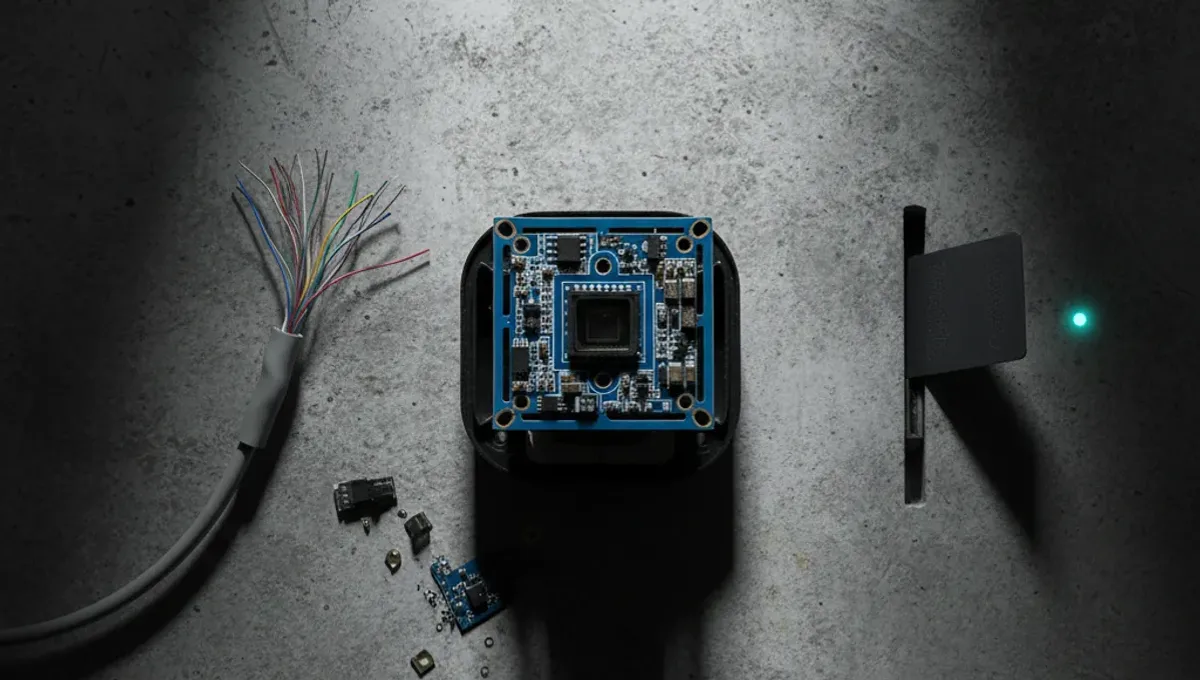
What Happened in the Ukraine Dahua Breach
Ukraine's Computer Emergency Response Team (CERT-UA) and the State Special Communications Service (SSSCIP) documented unauthorized access to Dahua IP cameras and digital video recorders across multiple organizations and private networks. Attackers gained the ability to view live video streams, alter device settings, and create new administrator accounts on compromised systems. The scope of the campaign remains unclear, but the targeting of critical infrastructure context in Ukraine suggests this was not random exploitation of consumer devices.
The attack occurred in a period when Ukrainian networks face sustained reconnaissance and potential sabotage efforts. The fact that a national response team issued a formal alert indicates the breach touched systems of concern to state security, though civilian surveillance networks may also have been affected.
How P2P Access Became an Attack Vector
Dahua cameras and DVRs include a peer-to-peer connectivity feature designed to allow users to access their devices remotely without configuring port forwarding or dynamic DNS. This convenience feature works by establishing an outbound connection from the device to Dahua's cloud relay servers, which then broker connections from authorized clients. The architecture itself is not inherently flawed, but the implementation created a gap attackers exploited.
Attackers did not need to break into Dahua's cloud infrastructure. Instead, they targeted devices protected only by default or weak credentials. Once authenticated to a device's P2P connection, an attacker gained the same privileges as an administrator using the local network interface. The P2P channel bypassed any firewall rules users may have configured on their router because the connection originated from inside the network, not from outside.
Authentication Weaknesses That Enabled Compromise
Survey and forensic work on similar Dahua devices has shown that many units ship with hardcoded or easily guessable default credentials. Users who failed to change these credentials at setup left their devices open to brute-force attacks. An attacker armed with common default usernames and passwords could authenticate via the P2P interface and gain immediate administrative access.
The weakness was compounded by the fact that many organizations and individuals do not maintain inventory of their surveillance devices or prioritize credential rotation for hardware they perceive as non-critical. A camera mounted in a hallway is often forgotten after installation. Attackers relying on unchanged defaults face a large target surface of neglected or poorly managed equipment.
Dahua has released firmware patches addressing authentication bypass vulnerabilities in the past, but patches are only effective if deployed. In Ukraine, as in most regions, a mix of patched and unpatched devices exists in the field. The campaign likely targeted both.
What Attackers Could Do Once Inside
After gaining access, attackers performed several actions that reveal their intent and capability. They modified device configurations, which could include disabling logging or altering recording settings to hide their presence. They created new administrator accounts, ensuring persistent access even if the original weak credential was discovered and changed. They viewed live and recorded video streams, potentially gathering intelligence on physical locations and routines.
For an attacker conducting reconnaissance on critical infrastructure, this level of control is highly valuable. A compromised camera network provides persistent visibility into building access points, staff movement, and security protocols. The ability to create lasting accounts means the attacker can return later without relying on the original vulnerability.
Why This Matters Beyond Ukraine
The Dahua campaign reflects a broader fragility in the Internet of Things ecosystem. Surveillance equipment is often purchased, installed and forgotten. Unlike computers or smartphones, cameras rarely receive security updates after deployment. Manufacturers prioritize feature development over long-term patch support. Users often do not have the expertise or visibility to track vulnerabilities in every connected device they own or manage.
Organizations in other regions face the same risk. An attacker using the same techniques could compromise Dahua devices globally. The attack surface extends to hospitals, schools, corporate offices, factories and private homes. In many cases, the compromise would go undetected indefinitely because footage is rarely audited for signs of tampering or access.
Verification and Immediate Actions
If you manage Dahua IP cameras or DVRs, take the following steps to reduce exposure:
- Log into each device via its local interface and verify the active administrator accounts; unfamiliar accounts may indicate compromise.
- Check the firmware version against Dahua's security advisories and apply patches if updates are available.
- Change all default credentials to strong, unique passwords; do not reuse credentials across devices.
- Disable P2P access if your use case does not require it; this reduces remote attack surface.
- Enable logging on the device itself and review access logs for unauthorized activity.
- If possible, isolate surveillance devices on a separate network segment from critical systems.
- Contact Dahua support or consult their official security page to confirm your device model is not subject to a known unpatched vulnerability.
For organizations, treat this incident as a signal to audit all surveillance hardware inventory, assess patch status and enforce credential policies across all connected devices. Dahua is one vendor among many, but the underlying weaknesses (weak defaults, delayed patches, forgotten hardware) apply across the industry.
What Remains Unknown and What to Monitor
The total number of compromised devices in Ukraine remains unconfirmed. CERT-UA and SSSCIP have not disclosed whether the attackers continue to maintain access or whether the campaign is now contained. The identity and motivation of the attackers have not been publicly attributed. Security researchers and vendors continue to examine the incident to determine whether novel exploits were used or whether the attack relied entirely on known weaknesses and weak credentials.
Monitor Dahua's official security announcements and CERT-UA advisories for updated guidance. If you work in security operations, treat this as a case study in how legacy hardware vulnerabilities and poor credential hygiene compound to create persistent compromise. The attack succeeded not because of a zero-day flaw, but because the environment invited it.
Takeaway: Surveillance Hardware Is Security Hardware
Many organizations treat IP cameras as peripheral devices, separate from their security posture. This incident underscores that any system with remote access, persistent credentials and network presence is a security system. A compromised camera is a compromised sensor feeding an attacker intelligence about your operations. The Dahua campaign in Ukraine demonstrates that this risk is not theoretical or limited to advanced persistent threats; it is happening now against standard commercial equipment using known weaknesses. The difference between compromise and security lies in mundane tasks: applying patches, changing default credentials and auditing what is actually connected to your network. Start with an inventory of every Dahua device you own or manage, verify its firmware version, and change its password. These steps are not glamorous, but they are the foundation that determines whether a simple vulnerability becomes a breach.
Source: The Hacker News