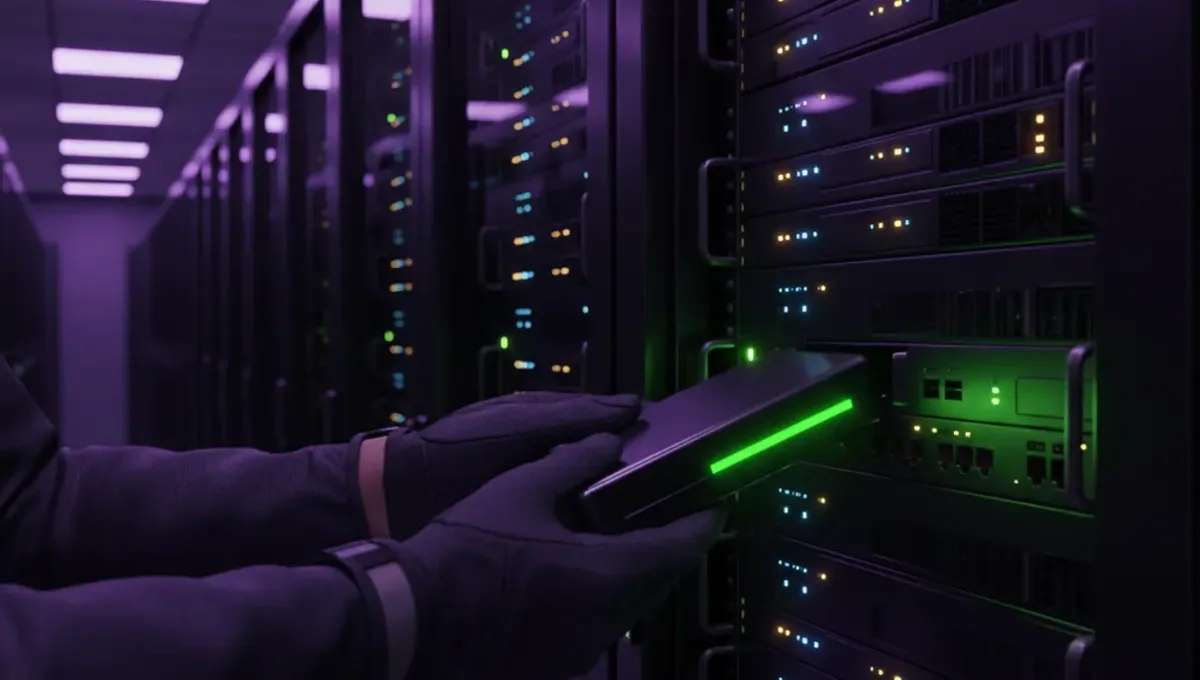
Understanding the Check Point Compromise
Check Point is a widely deployed security appliance vendor whose management servers act as a central control point for firewall and threat-prevention infrastructure across enterprises. When a threat actor compromises these management layers, they gain visibility into an organization's entire security posture and can potentially disable, reconfigure or bypass protections across multiple network segments. The fact that 24 servers serving 22 distinct organizations were compromised suggests either a scalable exploitation method or a prolonged reconnaissance phase that identified multiple vulnerable instances.
How AI Changed the Attack Pattern
The use of artificial intelligence in this campaign appears to have accelerated the reconnaissance and exploitation phases. Rather than manually probing each target, the threat actor likely deployed AI-driven tooling to automate vulnerability scanning, payload delivery and post-exploitation actions. This represents a shift from traditional brute-force campaigns: AI can test hundreds of exploitation techniques in parallel, adapt payloads based on responses in real time, and prioritize high-value targets based on network topology data. Security researchers have noted that such automation reduces the human effort required per successful compromise, making large-scale attacks more economically viable for threat actors.
Sectors and Organizations at Risk
The targeting of financial services, energy, and government organizations suggests the threat actor was not pursuing random victims but had specific strategic or financial motives. Financial services firms are obvious targets for data theft and lateral movement into connected partners. Energy sector infrastructure is of interest to nation-state and financially motivated groups alike because disruption has cascading effects. Government agencies are targeted both for espionage and to establish persistent footholds. Organizations in these sectors typically face the highest remediation costs and regulatory scrutiny after a breach, which can amplify the pressure on executives to pay ransom demands or meet attacker conditions.
Reality Layer: How Enterprise Compromise Cascades
According to security-vendor incident reports and law-enforcement advisories, compromising a management server typically precedes ransomware deployment or persistent backdoor installation. Because management servers hold credentials, encryption keys, and configuration data for downstream security tools, an attacker who controls them can disable endpoint protection, modify firewall rules, or stage lateral movement undetected. The Tor Project documentation on onion services and security research on supply-chain attacks emphasize that centralized security infrastructure is a high-value target precisely because it multiplies impact. For ordinary organizations and enterprises reading this, the lesson is that management layer security requires equal rigor to perimeter defense: unpatched management servers are often treated as "trusted" and monitored less strictly than external-facing assets.
Technical Indicators and Detection Gaps
GreyNoise, which tracks internet-wide scanning activity, has visibility into attack tools and patterns that conventional security providers may not detect until weeks or months after initial compromise. The fact that GT13 activity was identified by threat intelligence platforms rather than by victims themselves highlights a persistent gap: many organizations do not have adequate logging or behavioral monitoring on their management servers. Check Point has published guidance recommending credential rotation, network segmentation of management interfaces, and review of authentication logs, but implementation rates remain inconsistent. Organizations using Check Point infrastructure should assume that if their management server was reachable from the internet or accessible to a compromised internal host, it may have been targeted.
Verification and Remediation Steps for Affected Organizations
If you operate Check Point security infrastructure, verify your security posture by taking these actions:
- Check your management server logs for failed and successful authentication attempts, particularly SSH or administrative interfaces, over the past 90 days.
- Review any configuration changes made to firewalls, VPNs, or threat-prevention policies that you do not recognize.
- Query your threat-intelligence platform or contact Check Point's support channel to confirm whether your IP address or organization appears in public vulnerability scanning or compromise databases.
- Rotate all credentials used to access Check Point management servers and enforce multi-factor authentication on all administrative accounts.
- Isolate management servers to private networks or jump hosts; remove any direct internet exposure or accessibility from compromised segments.
- Engage a third-party incident-response team to perform forensic analysis of logs and memory if you suspect unauthorized access occurred.
Why This Attack Matters Beyond Check Point
The use of AI-driven offensive tooling in this campaign foreshadows a broader shift in how enterprise attacks are executed. When attackers can automate reconnaissance, exploitation and lateral movement, the traditional security model of detection and response becomes strained. Organizations that have treated their security infrastructure as "set and forget" and that run dated versions of management software are at particular risk. The integration of AI into attack chains also means that signature-based detection becomes less effective: the attacker's tools can mutate faster than defenders can write rules. What matters most is not the specific vendor or the specific tool, but understanding that any centralized infrastructure component is a concentration of risk.
What You Can Do Today
Regardless of which security vendor you use, treat your management and control-plane infrastructure with the same caution you would apply to critical production systems. Ensure management servers do not appear in search results on public vulnerability scanners (using Shodan or similar tools to verify), enforce strict access controls and logging, and maintain an up-to-date inventory of all management services connected to your network. If you operate in a regulated sector such as financial services or energy, review your incident-response plan and threat-intelligence subscriptions to ensure you can detect and respond to management-layer compromise quickly. The lesson from the Check Point campaign is that defenders must monitor not just the edge of the network, but the control systems that protect it.
Source: The Hacker News