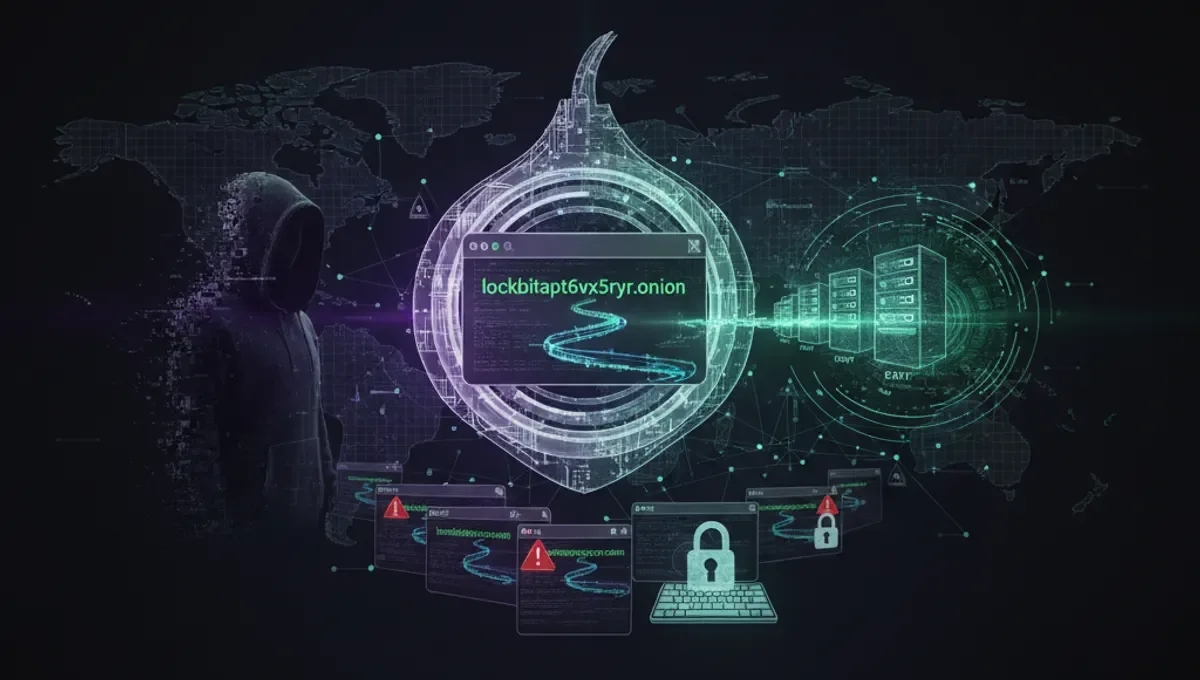
What Is a Dark Web Site and How Does It Differ from Surface Web Sites
A dark web site runs on the Tor network and uses a .onion domain instead of standard top-level domains like .com or .org. These sites are not indexed by conventional search engines and require Tor Browser to access. The key difference is routing: dark web traffic passes through multiple Tor relays, encrypting your IP address and location from the site operator. A site of dark web can serve legitimate purposes—anonymous journalism platforms, privacy-focused communication tools, whistleblowing channels—or illegal marketplaces. The anonymity layer makes dark web sites attractive for both privacy advocates and criminal operators. Understanding this distinction is essential before accessing any onion address, as the darknet hosts both lawful services and illegal content.
How Onion Routing and .Onion Addresses Work Technically
Onion addresses are cryptographic identifiers generated from a site's public key. A v3 onion address (the current standard) is 56 characters long and derived from the site's encryption keys, making it mathematically impossible to forge without the private key. When you connect to an onion site, Tor constructs a circuit through at least three relays before reaching the destination, with each relay decrypting only its layer of encryption—hence 'onion' layers. The site operator also connects through Tor relays, hiding their server's real IP. This mutual anonymity means neither user nor site operator can easily identify each other. Onion dark web site directories list these v3 addresses and verify their uptime, but the directory itself does not control the sites. Understanding this architecture helps you recognize why a site uri dark web cannot be shortened or simplified without losing its cryptographic properties.
How to Verify Legitimate Onion Sites and Detect Phishing Clones
Phishing clones are fake onion mirrors designed to steal credentials or distribute malware. Verify a genuine onion site using these methods: First, check the site's PGP signature if provided—legitimate projects publish their public keys on multiple channels. Second, confirm the v3 address matches official announcements from the project's social media, email, or documentation. Third, look for HTTPS certificates (onion sites can use valid certificates) and check the certificate issuer. Fourth, examine the site's content for spelling errors, outdated information, or unusual design changes. The lockbit dark web site, for example, has been subject to numerous phishing clones; verifying the address against official statements is critical. Never trust a .onion address from a single source. Cross-reference with the project's official channels, archived versions on legitimate mirrors, and community discussions. If a site requests unusual permissions or asks for private keys, it is almost certainly fraudulent.
Step-by-Step Process for Safely Accessing Onion Sites via Tor Browser
- Download Tor Browser from the official Tor Project website only—never from third-party sources. Verify the signature using the provided GPG key.
- Install Tor Browser in a dedicated directory and run it. Allow it to connect to the Tor network; this may take 30–60 seconds.
- Once connected, open a new tab and paste the .onion address into the address bar. Tor Browser will route your connection through the Tor network.
- Wait for the site to load; onion sites are often slower due to multiple relay hops.
- Do not maximize your browser window—this can reveal your screen resolution to the site.
- Disable JavaScript in Tor Browser settings if you visit untrusted sites, as JavaScript can bypass Tor anonymity.
- Clear your browser cache and cookies regularly.
- Never open additional applications while using Tor, as they may leak your real IP. The onion dark web site directory provides addresses, but the security of your connection depends entirely on proper Tor Browser configuration.
Common Mistakes That Compromise Anonymity When Accessing Dark Web Sites
Logging into personal accounts while using Tor immediately deanonymizes you—the site operator sees your username and can correlate it with other data. Maximizing your browser window reveals your screen resolution, which combined with other metadata can fingerprint you. Using plugins or extensions in Tor Browser can introduce vulnerabilities; the official Tor Browser is deliberately minimal. Torrenting over Tor is ineffective and dangerous—BitTorrent leaks your real IP regardless of Tor. Visiting the dark web from a shared network (library, workplace, school) logs your activity in institutional records. Enabling plugins like Flash or Java bypasses Tor entirely. Visiting both clearnet and darknet sites in the same session without restarting Tor can link your identities. Keeping Tor Browser outdated exposes you to known exploits. The the dark web official site or any legitimate onion directory will warn against these mistakes in their documentation.
How Dark Web Directories and Onion Indexes Function
A dark web directory is a manually curated or semi-automated list of .onion addresses, similar to a phone book for the Tor network. Directories verify uptime by periodically testing each address and removing dead links. Some directories categorize sites by function—communication, marketplaces, forums, news—while others provide search functionality. Onion indexes differ from directories: indexes crawl and index the content of onion sites, similar to how search engines index the clearnet, but this is technically difficult because Tor's anonymity makes crawling slow and unreliable. Most onion indexes are incomplete and outdated. A site for dark web that functions as a directory typically does not host illegal content itself; it simply aggregates addresses. The directory operator may verify PGP signatures or check for phishing clones, but cannot guarantee the legality or safety of linked sites. Users remain responsible for evaluating each site they visit.
Tor vs. VPN vs. I2P: Comparing Anonymity and Use Cases
Tor routes traffic through three or more relays operated by volunteers, providing strong anonymity but slower speeds. Tor is designed for anonymous browsing and accessing hidden services. VPNs encrypt traffic and route it through a single provider's server; they are faster but require trusting the VPN operator with your real IP. VPNs are better for hiding your activity from your ISP but do not provide the same anonymity as Tor for accessing hidden services. I2P is a peer-to-peer network designed for internal communication and file sharing; it is less suitable for general web browsing. I2P offers better performance than Tor for certain use cases but smaller user base means less anonymity through numbers. Tor is the only practical method for accessing .onion sites. If you need to access a site uri dark web, Tor Browser is the standard tool. Each technology has different threat models: Tor protects against ISP surveillance and site operator identification; VPNs protect against ISP surveillance but not site operator identification; I2P protects against network-level surveillance within the I2P network.
Frequently asked questions
Is accessing a dark web site illegal
Accessing the Tor network and visiting onion sites is legal in most countries. However, the content of specific sites may be illegal. Visiting a marketplace that sells illegal goods is not itself a crime in most jurisdictions, but purchasing illegal items is. The legality depends on your location and the specific site's content, not on using Tor or .onion addresses.
How do I know if an onion site is real or a phishing clone
Verify the v3 address against the site's official announcements on multiple channels—social media, email, documentation. Check for PGP signatures if provided. Look for HTTPS certificates and examine the certificate issuer. Compare the site's design and content with archived versions. Phishing clones often have spelling errors or outdated information. Never trust a single source for an address.
Can I access onion sites without Tor Browser
Technically, other Tor clients exist, but Tor Browser is the recommended and safest option. It includes security features, automatic updates, and proper isolation. Using alternative clients or browser plugins to access .onion addresses is risky and may compromise your anonymity or expose you to malware.
Why are dark web sites so slow
Onion sites are slow because traffic is routed through multiple Tor relays, each adding latency. The site operator also connects through Tor relays. This multi-hop routing is necessary for anonymity but reduces speed. Additionally, many onion sites run on limited hardware or volunteer infrastructure, further slowing response times.
What should I do if I find an illegal site on a dark web directory
Report it to the directory operator if they provide a contact method. You can also report illegal content to law enforcement or organizations like the National Center for Missing and Exploited Children. Do not attempt to access or interact with the illegal content, as this may expose you to legal risk or malware.