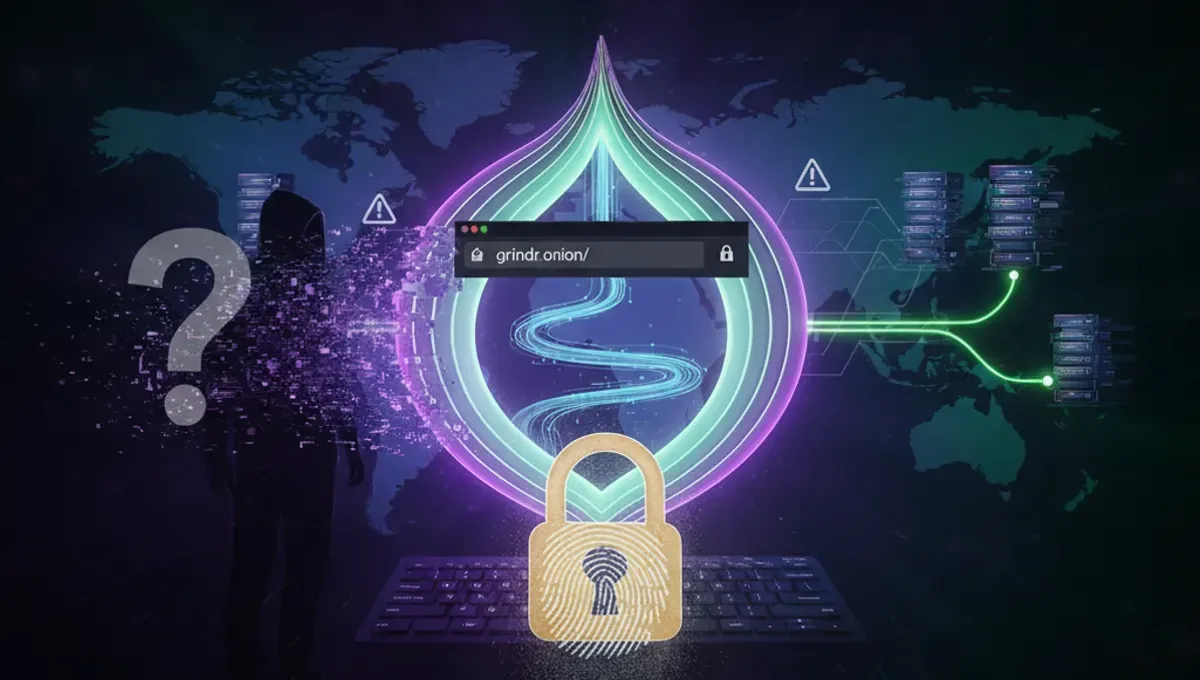
What Happened: The Grindr Data Sharing Scandal
In April 2024, Grindr faced a lawsuit in the United Kingdom alleging systematic violations of privacy law. The case centered on a straightforward but damaging practice: the app shared users' sensitive personal information—including HIV status, sexual preferences, and location data—with third-party advertising and analytics companies without explicit user consent.
The £26 million settlement represents one of the largest privacy fines against a dating platform. For context, this penalty reflects the severity of exposing health information classified as "special category data" under U.K. and European privacy regulations (GDPR and UK Data Protection Act 2018). The settlement also signals to other tech companies that monetizing intimate user data carries real financial and reputational risk.
Why This Matters for Privacy-Conscious Users
The Grindr case exposes a fundamental tension in mainstream app design:
- Data is the product. Dating apps generate revenue primarily through advertising, which requires detailed user profiles sold to data brokers and marketers.
- Consent is often illusory. Privacy policies are lengthy, written in legal jargon, and users have no real choice but to accept them to access the service.
- Health data gets exploited. HIV status is not merely personal preference data—it's medical information that can expose users to discrimination, blackmail, insurance denial, or violence if leaked or sold.
For LGBTQ+ users and anyone managing sensitive health conditions, this settlement underscores why mainstream platforms cannot be trusted with intimate information.
The Role of Tor and Anonymous Platforms
Tor and onion-based services offer a technical alternative to this surveillance model. Here's how:
Encryption at the Protocol Level
The Tor network routes traffic through multiple relays, encrypting data at each hop. Even if an observer captures packets, they see only encrypted traffic, not the content or destination. This differs fundamentally from a traditional app, where the company itself holds access to plaintext data.
No Central Data Collection Point
Onion services operated correctly do not store user profiles on company servers. Instead, communications happen peer-to-peer or are temporarily processed without persistent logging. This means no database of HIV statuses, sexual preferences, or location histories can be breached, sold, or weaponized.
Metadata Resistance
Tor hides not only message content but also metadata—who talks to whom, when, and from where. This is critical for dating and health-sensitive communications, where metadata alone can be as revealing as content.
Distinguishing Legitimate Tor-Based Alternatives from Phishing Clones
As mainstream app failures drive users toward privacy-focused solutions, predators create fake onion mirrors to harvest credentials and data. Protect yourself:
Verification Steps
- Use official directories. Visit established Tor project resources and privacy organizations that maintain verified lists of legitimate onion services.
- Check PGP signatures. Legitimate services publish their onion address fingerprints signed with a long-standing PGP key. Verify the signature chain of trust.
- Test for HTTPS certificates. Even on onion, check for SSL/TLS certificates (look for the lock icon). Legitimate services secure their endpoints.
- Look for v3 addresses. Modern onion services use v3 addresses (56 characters, ending in .onion), which are more resistant to attacks than older v2 addresses.
- Cross-reference across multiple sources. If a service claims to be an alternative to Grindr, find mentions in privacy forums, academic discussions, and established darknet directories.
- Run WHOIS checks on the PGP key. Verify that the key claiming to belong to the service has a verifiable history and reputation in the community.
Common Phishing Tactics
- Slight misspellings of the official onion address
- Missing or self-signed certificates without a clear trust path
- Promises of "total anonymity" without technical explanation
- Requests to create accounts using email addresses (defeats the purpose of Tor)
- Pop-ups asking to install plugins or additional software
Tor vs. VPN vs. I2P: Which Protects Your Dating Data?
| Feature | Tor | VPN | I2P |
|---|---|---|---|
| Encryption | Multi-hop, circuit-based | Single tunnel | Bidirectional tunnels |
| Exit point visibility | VPN provider sees exit traffic | VPN provider sees all traffic | No single exit point |
| Hidden services | Native (.onion addresses) | Requires Tor anyway | I2P sites only |
| Speed | Slower, intentional latency | Faster, for streaming | Medium, optimized for privacy |
| User base | Large, security-focused | Large, mixed motivations | Smaller, hardcore privacy community |
| Metadata leaks | Strong resistance | Depends on logs | Strong resistance |
| Best for | Sensitive communications, hidden services | General privacy, bypassing geo-blocks | Long-term anonymous activities |
Takeaway: For protecting dating and health data, Tor's multi-hop design and native hidden services offer superior protection compared to VPNs, which still funnel all your traffic through a single provider.
Common Mistakes That Compromise Anonymity
Even when using Tor or onion services, users often undermine their own privacy:
- Reusing usernames. A username tied to your real identity across platforms defeats anonymity. Create unique identifiers for each service.
- Uploading photos without stripping metadata. Images contain EXIF data (camera model, GPS location, timestamps). Always strip metadata before uploading.
- Mixing Tor and clearnet activities. If you browse Tor for sensitive dating but then log into Facebook with your real name, you've linked your anonymous activity to your identity.
- Maximizing your browser window. Window size is a fingerprinting vector. Keep it small and consistent.
- Installing plugins. Browser extensions can leak IP addresses. Use only the default Tor Browser.
- Trusting onion services without verification. Even on Tor, phishing and fraud exist. Always verify certificates and keys.
Frequently Asked Questions
Q: Can I use regular dating apps over Tor?
Technically yes, but most mainstream apps are designed to collect data and will flag you for suspicious activity (Tor IP, unusual login patterns). Purpose-built onion services are safer and faster.
Q: Does Tor slow down dating app performance?
Yes, Tor adds latency (typically 1–3 seconds per request) due to multi-hop routing. This is intentional and part of its security model. For real-time chat, I2P or decentralized protocols designed for speed may be alternatives, though with different trade-offs.
Q: What if I want to verify a v3 onion address?
V3 addresses are 56-character strings mathematically derived from the service's cryptographic key. The service operator publishes this address publicly. To verify you're connecting to the real service, check that the Tor Browser confirms a secure connection and cross-reference the address across multiple independent sources (Reddit threads, privacy forums, GitHub repositories).
Q: Are all onion services anonymous?
No. An onion service can be anonymous or pseudonymous to visitors, but the service operator's identity can still be discovered through traffic analysis, law enforcement cooperation, or operational security failures. Legitimate privacy services are typically run by organizations with transparency practices and security audits.
Q: Should I avoid dating apps entirely?
Not necessarily. If you choose to use mainstream apps, minimize the data you provide (no real location, no health details, no photos with identifying information), turn off analytics and advertising personalization, and use Tor or a VPN. However, privacy-first alternatives exist for those unwilling to accept data harvesting.
Practical Takeaways
The Grindr settlement is a landmark reminder: mainstream tech companies monetize your intimate data, and legal penalties are treated as business costs, not deterrents. Here's what to do:
- Assume mainstream apps will exploit sensitive data. Design your usage accordingly.
- Use Tor for dating and health communications if you want actual privacy, not just "encrypted in transit."
- Verify onion service authenticity through multiple independent sources and cryptographic signatures before sharing any personal information.
- Strip metadata from images and avoid fingerprinting vectors (window size, plugins, consistent usernames).
- Understand the Tor/VPN/I2P trade-offs. Tor offers the strongest privacy guarantees for hidden services but at the cost of speed.
- Stay vigilant against phishing clones designed to exploit users migrating away from compromised platforms.
Privacy is not a paranoia—it's a rational response to how modern platforms operate. The Grindr case proves that "terms of service" agreements are not protection; they're permission slips for exploitation.
Source: The Hacker News